Ever finished a long highway drive feeling like your eyes have been through a marathon? That burning sensation, the headache creeping up from behind your eyes, the desperate need to close them even though you’re still miles from home—these aren’t just minor inconveniences. They’re signs of serious eye strain that can affect both your driving safety and overall well-being. Here’s something that might surprise you: a significant portion of this discomfort can be prevented through something as simple as window tinting.
Your eyes work incredibly hard during extended highway drives, constantly adjusting to changing light conditions, fighting glare from multiple sources, and maintaining focus on distant objects for hours at a time. Without proper protection, this visual workload becomes exhausting. Window tinting serves as a crucial buffer between your eyes and the harsh elements of highway driving, transforming your vehicle into a more comfortable and safer environment. Let’s explore exactly how this works and why it matters for anyone who spends serious time behind the wheel.
Understanding Eye Strain: What Happens During Extended Driving
Before we discuss solutions, you need to understand what’s actually happening to your eyes during those long stretches on the highway.
The Anatomy of Driver Fatigue
Eye strain, medically known as asthenopia, occurs when your eyes become overworked. During highway driving, your visual system operates in overdrive for extended periods. You’re constantly tracking moving vehicles, reading signs, monitoring mirrors, and adjusting to changing light conditions—all while maintaining focus on the road ahead.
Your eyes contain muscles that control focus, pupil size, and eye movement. Like any muscles, they fatigue with continuous use. On a highway drive, these muscles rarely get to rest. Your pupils continuously dilate and constrict in response to brightness changes. Your focusing muscles constantly adjust between near objects like your dashboard and distant vehicles. Your eye movement muscles track multiple objects simultaneously.
This continuous muscular activity creates tension that spreads beyond your eyes. The ciliary muscles that control your lens focusing become fatigued. The iris muscles controlling pupil size work overtime. The extraocular muscles moving your eyes grow tired. All this muscle fatigue translates into the uncomfortable symptoms you experience.
Common Symptoms You Shouldn’t Ignore
Eye strain manifests in various ways, and recognizing these symptoms is important for understanding how window tinting can help. The most obvious sign is a burning or tired feeling in your eyes. You might experience increased sensitivity to light, making it uncomfortable to look at bright areas.
Blurred vision often develops after extended driving, especially when you try to shift focus between near and far objects. Your eyes may feel dry and irritated, even if you’re normally comfortable. Headaches frequently accompany eye strain, typically starting around your temples or behind your eyes and sometimes spreading across your forehead.
Some drivers experience difficulty concentrating as eye strain worsens. Your eyes might feel heavy, with an overwhelming urge to close them. You might notice increased blinking or a feeling that you can’t quite get your eyes to focus properly. These aren’t just annoyances—they’re warning signs that your visual system is under excessive stress.
Primary Causes of Eye Strain on Highway Journeys
Multiple factors contribute to eye strain during highway driving, and understanding them helps explain how window tinting provides relief.
Glare: The Invisible Enemy
Glare is perhaps the single biggest contributor to eye strain on highways. It occurs when bright light enters your eyes from an unwanted direction or at an intensity that overwhelms your visual system. Think of glare as visual noise that your eyes and brain must constantly filter out.
Direct glare comes from the sun shining straight into your eyes. This forces your pupils to constrict rapidly, creating stress on your iris muscles. Your eyelids naturally want to close for protection, leading to constant squinting. Even when you’re not looking directly at the sun, peripheral glare from the bright sky creates visual discomfort.
Reflected glare is equally problematic. Sunlight bounces off the road surface, other vehicles, road signs, and buildings, creating multiple glare sources. Your dashboard and hood can reflect sunlight upward into your field of vision. These reflections force your eyes to constantly adjust and readjust, never settling into a comfortable state.
The worst part? Glare doesn’t just cause discomfort—it actually reduces your ability to see clearly. It decreases contrast sensitivity, making it harder to distinguish objects from their backgrounds. This forces your eyes to work even harder to process visual information, compounding the fatigue.
Intense Sunlight and Brightness Variations
Highway driving often means extended exposure to intense sunlight with minimal shade. Unlike city driving where buildings provide periodic relief, highways offer little respite from continuous sun exposure. Your eyes face a constant barrage of bright light that forces your pupils to remain constricted for hours.
The problem intensifies with brightness variations. You might drive through a shaded area under a bridge, experiencing temporary relief as your pupils dilate. Then suddenly you’re back in bright sunlight, forcing rapid constriction again. This constant adjustment cycle exhausts your iris muscles.
Weather conditions complicate things further. Partly cloudy days create particularly challenging conditions as bright sunlight alternates with cloud cover. Your eyes continuously adjust to these changes, never finding equilibrium. Even on overcast days, the diffused bright light can cause strain, especially with extended exposure.
Prolonged Focus and Visual Concentration
Highway driving requires sustained visual attention at multiple distances simultaneously. You’re monitoring vehicles hundreds of feet ahead while also tracking cars in adjacent lanes. You’re reading signs, checking mirrors, and monitoring your dashboard—all activities requiring different focal distances.
Your eyes’ focusing system, controlled by the ciliary muscles, must continuously adjust to these varying distances. On a highway where you might maintain the same general speed and position for long periods, this focusing activity becomes repetitive and fatiguing. There’s no natural variation to give these muscles a break.
The concentration required for safe highway driving also means you blink less frequently than normal. Reduced blinking leads to dry eyes, which compounds strain symptoms. Your tear film evaporates more quickly, leaving your eyes feeling irritated and tired.
How Window Tinting Filters Harmful Light
Now let’s get into how window tinting actually addresses these problems. Quality window films do much more than just darken your windows—they selectively filter different types of light.
Blocking Infrared and Ultraviolet Radiation
Window Tinting Adelaide provides substantial protection against ultraviolet radiation, which your eyes are exposed to constantly during daytime driving. While UV light isn’t directly visible, it contributes to eye fatigue and can cause long-term damage to eye structures. Quality tinting blocks up to 99% of UV rays, significantly reducing this invisible stressor.
Infrared radiation, which you experience as heat, also impacts eye comfort. When your vehicle interior heats up from infrared transmission through windows, you experience overall discomfort that exacerbates eye strain. Your body’s stress response to heat includes increased tension, which affects your facial and eye muscles.
Advanced window tinting films, particularly ceramic options, excel at blocking infrared radiation. By keeping your interior cooler, they create a more comfortable environment where your entire body—including your eyes—can relax. This comprehensive comfort reduces the compounding effect where physical discomfort amplifies eye strain.
Reducing Visible Light Transmission
Window tinting reduces the amount of visible light entering your vehicle, but it does so intelligently. Quality films don’t just make everything darker—they reduce light intensity to levels that are comfortable for your eyes while maintaining adequate visibility for safe driving.
This reduction in visible light transmission means your pupils don’t need to constrict as much to manage brightness. Your iris muscles can maintain a more relaxed, intermediate state rather than constantly working to minimize light entry. This reduced muscular activity directly translates to less fatigue during extended drives.
The professionals at KD Auto Detailing understand that the right tint level balances light reduction with visibility needs. Too much reduction creates problems, while too little doesn’t provide adequate relief. Proper tinting creates that optimal middle ground where your eyes remain comfortable without compromising your ability to see clearly.
Glare Reduction: Your Eyes’ Best Friend
This is where window tinting truly shines in preventing eye strain. The glare reduction properties of quality tint films dramatically improve visual comfort during highway driving.
Direct Sunlight Management
Window tinting acts as a constant buffer between your eyes and direct sunlight. Instead of harsh, unfiltered sunlight streaming through your windows, the tint moderates light intensity before it reaches your eyes. This is similar to wearing sunglasses, but with some important advantages.
Unlike sunglasses that you might remove periodically or that can fall off or be forgotten, window tinting provides consistent protection. It covers all windows, protecting against sun coming from any angle. This comprehensive coverage is particularly valuable during highway driving when sun position changes relative to your vehicle throughout your journey.
The tint also eliminates the visual adjustment your eyes must make when moving between tinted windshield areas (often protected by sun visors) and untinted side windows. With comprehensive window tinting, your eyes experience consistent light levels throughout your entire field of view, reducing adjustment fatigue.
Eliminating Reflections from Road Surfaces
One of the most underappreciated benefits of window tinting is how it reduces reflected glare. When sunlight reflects off wet or light-colored road surfaces, it can be as blinding as looking toward the sun itself. Window tinting significantly reduces this reflected glare’s intensity before it reaches your eyes.
The same applies to glare from other vehicles. Sunlight reflecting off chrome bumpers, glass surfaces, and painted vehicle bodies creates multiple glare points that your eyes must filter out. Window tinting reduces these reflections’ intensity, making them less disruptive to your vision.
This glare reduction improves your visual comfort and enhances safety. By reducing the intensity of reflections and glare, window tinting actually improves your ability to see important details like brake lights, turn signals, and road hazards. Your eyes can focus on what matters rather than constantly fighting distracting glare sources.
Dashboard and Hood Glare Control
Here’s something many drivers don’t consider until they experience it: the glare from your own vehicle’s dashboard and hood can significantly contribute to eye strain. On bright days, sunlight reflects off these surfaces upward into your field of vision, creating a persistent distraction.
Window tinting, particularly on front and side windows, reduces the intensity of sunlight hitting these surfaces. Less intense light means less intense reflections bouncing back toward your eyes. This creates a calmer visual environment inside your vehicle, allowing your eyes to focus outward on the road without constant interference from internal reflections.
Some drivers notice that after getting their windows tinted, they suddenly realize how much they were unconsciously compensating for dashboard glare. Once it’s reduced, driving feels noticeably less taxing, even though they might not have consciously identified the glare as a specific problem before.
Creating Consistent Light Levels Inside Your Vehicle
Consistency is crucial for eye comfort, and this is an area where window tinting excels.
Why Sudden Brightness Changes Tire Your Eyes
Your pupils need time to adjust to brightness changes. When you suddenly move from shade to bright sunlight, your pupils must constrict quickly. When moving from brightness to shade, they must dilate. These adjustments aren’t instantaneous—they take several seconds to complete.
During highway driving, you encounter numerous brightness variations: passing under overpasses, driving through tree-lined sections, moving in and out of cloud shadows, and adjusting to changes in sun angle. Each variation triggers pupil adjustment, and these continuous adjustments accumulate into significant eye fatigue.
Window tinting reduces the magnitude of these brightness variations. While you still experience changes in light levels, they’re moderated by the consistent filtering the tint provides. Instead of dramatic swings between bright and dim conditions, you experience gentler transitions that require less aggressive pupil adjustments.
Maintaining Visual Comfort Throughout the Day
As the sun moves across the sky during a long drive, the angle and intensity of light entering your vehicle changes constantly. Morning sun might stream through your windshield, midday sun beats down from above, and afternoon sun blazes through side windows. Without tinting, your eyes must continuously adapt to these changing conditions.
Window tinting provides consistent protection regardless of sun position. Whether light is coming from ahead, above, or the side, it passes through tinted glass before reaching your eyes. This consistency means your visual system can settle into a comfortable state rather than constantly readjusting.
This benefit becomes particularly noticeable during multi-hour highway trips. The cumulative effect of consistent light levels makes a dramatic difference in how your eyes feel at the journey’s end. Drivers often report that after getting window tinting installed by professionals like those at KD Auto Detailing, they arrive at destinations feeling noticeably less visually fatigued.
Window Tinting and Contrast Enhancement
Here’s a counterintuitive benefit: by reducing overall brightness, window tinting can actually improve your ability to see clearly.
Improved Road Visibility
When excessive brightness floods your visual field, it reduces contrast sensitivity—your ability to distinguish between similar tones and shades. This phenomenon is why it’s harder to see details in extremely bright conditions. Your visual system becomes overwhelmed by the brightness, making subtle differences harder to detect.
Window tinting brings brightness down to levels where your eyes’ contrast detection works optimally. Objects stand out more clearly against their backgrounds. Road markings become more distinct. Vehicles are easier to track. Essentially, by reducing the “visual noise” of excessive brightness, tinting allows the important visual information to come through more clearly.
This improved contrast is particularly valuable for spotting potential hazards. Road debris, animals, pedestrians, and other vehicles become more visible when your eyes aren’t struggling against excessive brightness. It’s similar to how polarized sunglasses improve fishing visibility by reducing water surface glare—the same principle applies to driving visibility.
Better Definition in Various Weather Conditions
Window tinting provides benefits beyond just sunny conditions. In overcast weather, diffused bright light can still cause glare and strain. Tinting moderates this diffused brightness, improving visual comfort even when there’s no direct sunlight.
During rain, reflections from wet surfaces intensify. Water on roads, vehicles, and signs all create additional glare sources. Window tinting reduces these reflections’ intensity, making it easier to see clearly in wet conditions. This is particularly valuable during highway driving where high speeds mean you need maximum visual clarity to react safely.
Even in foggy conditions, window tinting can help by reducing the glare from your own headlights reflecting back from the fog. While tinting’s benefits are most dramatic in bright conditions, the consistent visual environment it creates proves valuable across various weather scenarios.
Reducing Squinting and Facial Tension
The physical act of squinting contributes significantly to eye strain and overall driving fatigue.
The Physical Impact of Constant Squinting
Squinting is your body’s natural protective response to excessive brightness. When you squint, you’re physically reducing the amount of light entering your eyes by narrowing the opening. However, maintaining a squint requires constant muscular effort from your eyelid muscles and surrounding facial muscles.
This constant muscular tension extends beyond just your eyes. Your forehead muscles tense, your temples tighten, and even your jaw and neck muscles can become involved as your body maintains a defensive posture against bright light. After hours of driving, this accumulated tension manifests as headaches, neck pain, and overall fatigue.
Window tinting eliminates the need to squint by reducing brightness to comfortable levels. Your facial muscles can remain relaxed throughout your drive. This relaxation might seem minor, but over hours of highway driving, the difference is substantial. You arrive at your destination without the characteristic tension headache and facial soreness that often accompanies long drives in untinted vehicles.
Relaxed Driving Posture Benefits
When you’re not fighting glare and brightness, your entire driving posture improves. You’re not unconsciously leaning away from bright windows, tilting your head to avoid direct sun, or hunching your shoulders in tension. Instead, you can maintain a neutral, comfortable posture that reduces overall physical fatigue.
This improved posture has cascading benefits. Better neck and spine alignment reduces back pain. Relaxed shoulders reduce upper body tension. Even your grip on the steering wheel loosens when you’re not tensed against visual discomfort. All these factors contribute to arriving at your destination feeling more refreshed and less physically drained.
The connection between visual comfort and overall physical comfort is stronger than most people realize. By addressing eye strain through window tinting, you’re actually improving your entire driving experience and reducing comprehensive fatigue.
 Protection During Dawn and Dusk Driving
Low-angle sun during sunrise and sunset creates particularly challenging driving conditions, and this is where window tinting proves especially valuable.
Managing Low-Angle Sun Exposure
When the sun sits low on the horizon, it shines directly into your field of vision at an angle that sun visors often can’t adequately block. During highway driving toward sunrise or sunset, you can face directly into the sun for extended periods, creating extreme glare conditions.
This low-angle sun is particularly problematic because it enters through your windshield at an angle that maximizes glare while minimizing your ability to block it. The sun sits right at the horizon, directly in your forward field of view, making it impossible to avoid without compromising your ability to see the road ahead.
Window tinting dramatically reduces this low-angle sun glare. While you still need to exercise appropriate caution during sunrise and sunset driving, tinted windows reduce the sun’s intensity enough that you can maintain comfortable vision without excessive squinting or visual discomfort. The tint acts as a permanent filter that protects you during these particularly challenging lighting conditions.
Highway routes that run east-west present this challenge daily during commute times. If you regularly drive these routes, you’ve probably experienced the frustration and eye strain of driving directly into the sun. Window tinting transforms these difficult drives into manageable, comfortable experiences.
Different Tint Levels and Their Impact on Eye Comfort
Understanding tint levels helps you choose the right option for your needs and legal requirements.
Light Transmission Percentages Explained
Window tinting is measured by Visible Light Transmission percentage, or VLT. This number indicates how much visible light passes through the tinted window. A 50% VLT means half the visible light passes through, while 20% VLT means only one-fifth passes through.
Higher VLT percentages (like 50% or 70%) provide lighter tinting with less light reduction. These lighter tint still offer UV protection and some glare reduction while maintaining very clear visibility. They’re often chosen for windshields where maximum visibility is prioritized.
Lower VLT percentages (like 20% or 35%) provide darker tinting with greater light reduction. These offer more dramatic glare reduction and increased privacy but may be restricted on certain windows depending on local regulations. They’re commonly used on side and rear windows where visibility requirements are less stringent.
The key is finding the right balance for your needs. Too light, and you don’t get adequate eye strain relief. Too dark, and you might compromise visibility, particularly at night. Professional installers like those at KD Auto Detailing can recommend appropriate tint levels based on your driving patterns, local regulations, and personal preferences.
Finding the Right Balance for Highway Driving
For highway driving specifically, the ideal tint level balances glare reduction with the need for clear visibility at high speeds. You want enough tinting to protect your eyes from strain without creating visibility challenges when making quick decisions.
Many highway drivers find that 35% to 50% VLT on side windows provides an optimal balance. This level significantly reduces glare and brightness while maintaining clear visibility of side mirrors, adjacent lanes, and approaching vehicles. For windshields, lighter tinting (70% VLT or a tinted strip along the top) offers some relief without compromising forward visibility.
Your personal sensitivity to light also factors into the ideal choice. Some people are more photosensitive and benefit from darker tinting, while others prefer lighter tint that maintain brighter interior conditions. There’s no single “perfect” tint level—it’s about finding what works for your eyes and driving conditions.
Local regulations also constrain your options. Most regions have specific laws about how dark window tinting can be, particularly on front side windows and windshields. These regulations exist to ensure adequate visibility for safe driving, so staying within legal limits is important even if you’d personally prefer darker tinting.
Long-Term Eye Health Benefits for Frequent Drivers
Beyond immediate comfort, window tinting provides important long-term protection for your eyes.
Professional drivers, long-distance commuters, and frequent road trip enthusiasts spend thousands of hours behind the wheel over their lifetimes. This extensive exposure to bright light, UV radiation, and glare creates cumulative effects on eye health. Cataracts, macular degeneration, and other eye conditions can be influenced by long-term UV exposure.
Window tinting provides daily protection against these long-term risks. By blocking UV radiation and reducing overall light exposure, tinted windows help preserve your eyes’ health over decades of driving. Think of it as sunscreen for your eyes—something that provides both immediate comfort and long-term protection.
The reduction in daily eye strain also matters for long-term comfort and functionality. Chronic eye strain can contribute to worsening vision, increased need for corrective lenses, and ongoing discomfort even when you’re not driving. By preventing daily strain, window tinting helps maintain your eyes’ natural comfort and function as you age.
For professional drivers whose livelihood depends on their ability to drive safely for extended periods, this protection becomes even more critical. Window tinting isn’t just a comfort feature—it’s an investment in career longevity and safety. The reduced fatigue means better concentration, faster reaction times, and improved decision-making throughout long driving shifts.
Navigate from Paradise to KD Auto Detailing Now
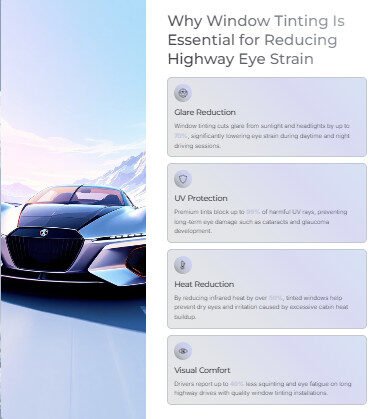
Why Window Tinting Is Essential for Reducing Highway Eye Strain
- Glare Reduction: Window tinting cuts glare from sunlight and headlights by up to 70%, significantly lowering eye strain during daytime and night driving.
- UV Protection: Tint block up to 99% of harmful UV rays, preventing long-term eye damage such as cataracts and glaucoma.
- Heat Reduction: By reducing infrared heat by over 50%, tinted windows help prevent dry eyes and irritation caused by excessive cabin heat.
- Improved Visual Comfort: Drivers report up to 40% less squinting and eye fatigue on long highway drives with quality window tinting.
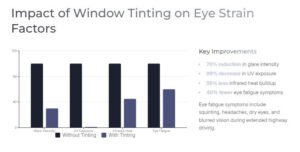
Visual Chart: Impact of Window Tinting on Eye Strain Factors
Factor Without Tinting With Window Tinting % Improvement Glare Intensity 100% 30% 70% ↓ UV Exposure 100% 1% 99% ↓ Infrared Heat Inside 100% 45% 55% ↓ Eye Fatigue Symptoms* 100% 60% 40% ↓
*Eye fatigue symptoms include squinting, headaches, and blurred vision.
Sources:
- PMC Study on tinted windshields and glare (2010)
- Global Tint UK Infographic (2023)
- Window Kote Largo (2025)
- Tint World® Eye Health Report (2025)
Window tinting acts like sunglasses for your car, enhancing safety and comfort on every highway journey.
Window tinting plays a vital role in reducing eye strain during long highway drives by addressing multiple factors that contribute to visual fatigue. By filtering harmful UV radiation, reducing glare from multiple sources, moderating brightness variations, and creating consistent light levels inside your vehicle, quality window tinting transforms your driving experience from visually exhausting to comfortably manageable. The benefits extend beyond immediate comfort to include improved safety through better visibility and contrast, reduced physical tension from constant squinting, and long-term eye health protection for drivers who spend significant time on the road. Whether you’re a daily commuter facing sunrise and sunset glare, a professional driver logging thousands of highway miles, or someone who simply wants to arrive at destinations feeling refreshed rather than visually drained, window tinting provides measurable, meaningful relief. Professional installation by experienced providers like KD Auto Detailing ensures you receive the optimal tint level for your specific needs while maintaining legal compliance and maximum visibility for safe driving.
FAQs
How much does window tinting actually reduce eye strain compared to wearing sunglasses?
Window tinting provides more comprehensive protection than sunglasses alone because it covers all windows and offers consistent filtering regardless of head position or viewing angle. Sunglasses only protect your eyes from light entering from the front and can be uncomfortable to wear for extended periods. Window tinting combined with sunglasses offers the best protection, but tinting alone significantly reduces strain by managing light entering from all directions including side windows and reflections.
Will window tinting make night driving more difficult or dangerous?
Quality window tinting at appropriate VLT levels does not impair night driving when properly installed. Most regions regulate maximum tint darkness specifically to ensure adequate nighttime visibility. Lighter tint levels (50% VLT or higher) provide daytime eye strain relief while maintaining excellent night visibility. Many drivers actually report improved night driving comfort with tinted windows because they reduce glare from oncoming headlights.
Can window tinting help if I already wear prescription glasses or contacts?
Absolutely. Window tinting complements prescription eyewear by reducing the environmental stressors your eyes face regardless of vision correction needs. Even with perfect prescription correction, your eyes still experience strain from glare, brightness variations, and UV exposure. Tinting addresses these external factors, making driving more comfortable whether you wear glasses, contacts, or neither.
How soon after installation will I notice a difference in eye comfort during drives?
Most drivers notice improved eye comfort immediately on their first drive after window tinting installation. The difference is particularly dramatic during bright, sunny conditions or when driving toward sunrise or sunset. The reduction in squinting and glare is instantly apparent, though you’ll appreciate the full extent of benefits more after your first extended highway drive where you can compare fatigue levels to previous untinted experiences.
Does the type of tinting material affect how well it prevents eye strain?
Yes, different tinting materials offer varying levels of eye strain protection. Ceramic films provide superior heat and UV rejection while maintaining excellent visibility and clarity. Carbon films offer very good performance at moderate cost. Dyed films provide basic protection at lower prices but may fade over time. For maximum eye strain relief during highway driving, ceramic films are generally recommended, though all quality films provide significant benefits compared to untinted windows.